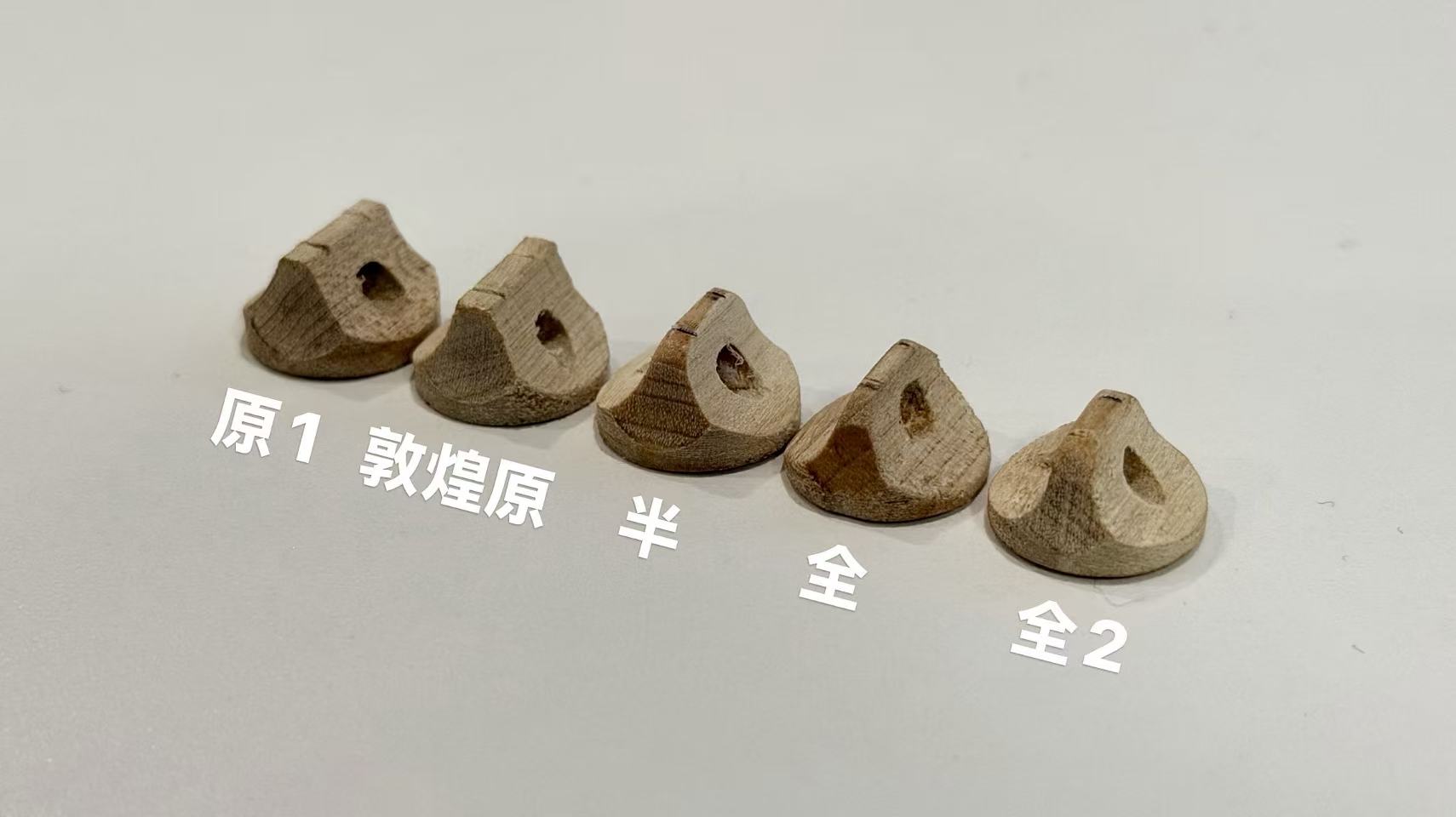
A small part of the instrument
The erhu bridge sits between the strings and the soundbox, and small changes to its shape are part of practical instrument adjustment. This collaborative manuscript follows modifications to the string slots, upper perimeter, waist, and underside. It connects the decisions behind that work with performers’ descriptions of playing response and recorded examples.
Listening alongside measurement
The supporting analysis compares recordings of long tones, scales, and a melody. Level and spectral measurements provide ways to describe differences heard in those examples. We examine the recordings alongside the physical changes and performer accounts, keeping the musical passage and recording conditions in view.
What the recordings can tell us
The comparisons concern particular bridges, instruments, performances, and recordings. A louder or brighter excerpt does not by itself identify the mechanical effect of one modification. Playing, setup, and recording conditions can also contribute. The analysis therefore serves as an exploratory description of the cases rather than a controlled estimate of what reshaping a bridge will do on another instrument.
Collaboration and revision
The manuscript is a collaboration with Yuxin Wu and Tianyue Gao. The paper and supporting acoustic analysis are being revised, with attention to how measured differences are reported and how strongly they can be interpreted. This work also connects to my broader interest in preserving the character of acoustic instruments when describing or working with their sound digitally.